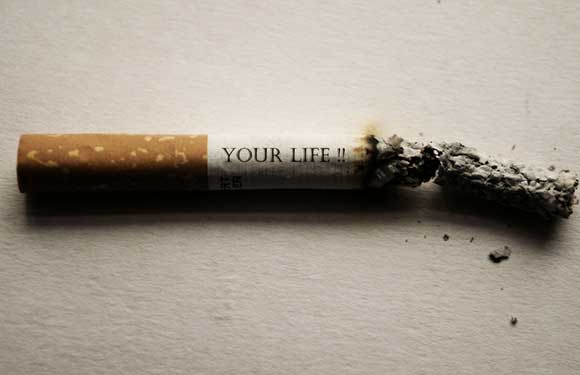
Everybody knows it (well, at least we have heard it somewhere): smoking kills. Real murderer as “Jack the ripper”, tobacco acts discreetly by maintaining a chronic inflammation on almost all the human organs. The permanent exposure to the nicotine, the main substance in the cigarette, plays a large part by holding this unnoticed chronic inflammation on human organs and blood vessels.
Historically, tobacco (herbaceous plant from the Solanaceae family) is originally from South America and it’s cultivated almost everywhere in the world. It was brought in Europe with the Christophe Colomb expedition in 1492. Its arrival to Africa was made through Morocco in 1593, and it’s just in 1930 that cigarette begun to emerge in Swiss and its expansion is still growing nowadays.
But, from where do the tobacco effects come?
Nicotine is the agent responsible for smoking dependence. Once inhaled, it quickly reaches the brain where it causes either stimulating or calming sensation by setting on specific receptors. So, to keep this stimulating or calming sensation, the body demands more. One cigarette leading to another, here comes the dependence.
Not just the nicotine…
Besides nicotine dependence effects, tobacco contains more than 7000 types of substances whose toxicity directly interferes with organs, in particular respiratory and cardiovascular systems.
We can cite substances such as carcinogenic substances and the carbon monoxide responsible for hemoglobin oxygenation decrease.
It’s important to notice that the three above-mentioned substances, namely nicotine, carcinogenic substances and carbon monoxide form a vicious circle: nicotine maintains the dependence, and subsequently, the continued exposure to carcinogenic substances and the carbon monoxide.
Several adverse effects on the body
Almost all the organs can be touched, but lungs and cardiovascular system are the first suffering for tobacco exposure.
Tobacco is responsible for more than 90% of lung cancers, chronic bronchitis evolving towards COPD and insidious dyspnea.
On the cardiovascular system, arteries inflammation can lead to:
- High blood pressure.
- Lower limbs arteritis which can cause necrosis.
- Coronary disease evolving towards myocardial infarction. The stimulating effect increase the heart rhythm and frequency leading to cardiac exhaustion.
Tobacco is incriminated in the occurrence of many cancers such as:
- Lips, mouth, throat and esophageal cancers.
- Pancreas cancer.
- Bladder cancer.
- Cervical cancer etc.
Concerning the pregnant woman, the risk is increased, even for the fetus:
- Miscarriage.
- Arterial hypertension in pregnancy.
- Fertility alteration.
- Prematurity.
- Fetal malformations etc.
Tobacco can worsen other diseases such as rheumatoid polyarthritis, psoriasis and oral diseases.
In practice…
According to what we just saw, tobacco has multiple adverse effects which discreetly occur. What does ‘’silent killer’’ really mean?
Let’s take a 40 years old man consulting a doctor for a cough.
The cough is a trivial symptom. So, a simple syrup is sufficient to fix the issue.
Years later, comes dyspnea, settling down insidiously with weight loss. The man put this on the count of oldness.
During an ulterior medical consultation, the pulmonologist asks for a thoracic x-ray and discovers a “white patch”.
To investigate deeper, the pulmonologist demands thoracic CT scan which reveals a pulmonary mass and the biopsy concluded that it’s a bronchogenic cancer.
The first symptom was a trivial cough which led us to a pulmonary cancer, and the biological analyses showed renal failure and high blood pressure.
Going back to his interview with the doctor, we found antecedent smoking exposure during 20 years without any other medical antecedents. To assess lung cancer risks occurrence, the pack-year number is estimated as being approximately 60 pack-years.
Notice that the pack-year number is obtained by multiplying the number of cigarette packs, (taking as reference a pack of 20 cigarettes) by the number of years where he smoked that quantity.
Even if the pack-year metric is more or less reliable as a predictor, it’s nevertheless used in current practice to estimate the occurrence of a pulmonary cancer risk due to smoking.
This is an example amongst many others. Smoking kills discreetly, on physical, psychological and even economical plan. Prevention is the only way for hedging those risks.