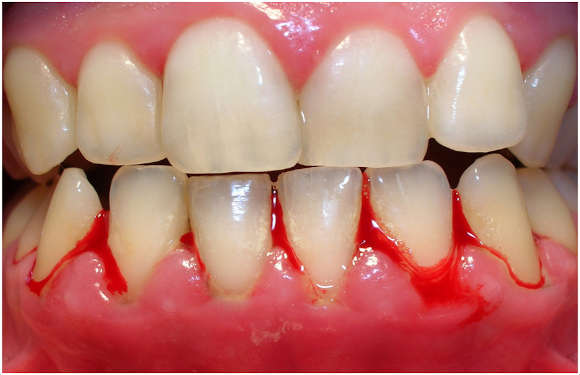
What is gingivitis?
The healthy tooth is supported by four structures which are: the alveolar bone, the periodontal ligament, the cementum, and the gingivae or gum.
The gingiva is divided into two:
- The free gingiva which is not attached to the tooth.
- The attached gingiva which is attached to the cervical portion of the tooth via an epithelial attachment which is known as the junctional epithelium.
The distance between the margin of the free gingivae and the attached gingivae when healthy is normally 3mm or less and is termed as being a pocket if that distance exceeds 3mm. A distance of more than 3mm indicates epithelial attachment loss.
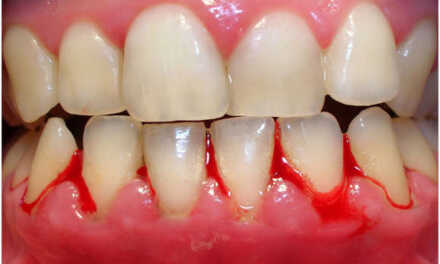
Gingivitis is simply defined as an inflammation exclusively limited to the gum or gingivae without pocket formation. It has no age predilection.
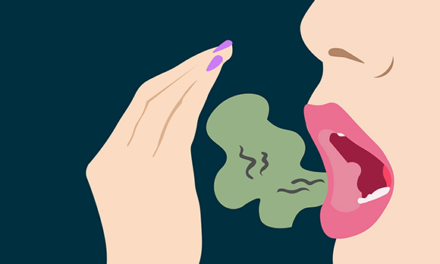
It is mainly characterized by redness, swelling and bleeding on gentle probing during a dental examination. Affected individuals usually complain of ‘bleeding gums during brushing’. The ‘knife-edge’ margins and stippled appearance associated with healthy gingiva disappear and are replaced by a more rounded, shiny appearance. Halitosis (bad breath) may be present but pain is usually not a feature.
What are the causes of gingivitis?
Gingivitis can be caused by:
- Poor oral hygiene as this can lead to plaque or tartar (bacteria communities) accumulation around the cervical portion of the teeth and irritation of the gingivae leading to inflammation.
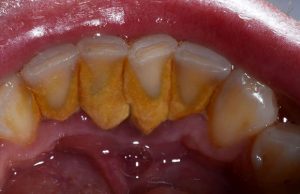
Dental Tartar Causes Gingivitis
Certain local factors may increase the likelihood of plaque accumulation. These include crowns with positive or negative ledge, overhanging amalgam or composite restorations, unpolished or inadequately polished amalgam or composite restorations, calculus, fracture teeth, etc.
- Endocrine conditions such as puberty, menstruation, pregnancy and diabetes mellitus especially when uncontrolled.
- Blood dyscrasias such as leukemia.
- Medications such as oral contraceptives, antihypertensives (Nifedipine) and antiepileptic drugs (Phenytoin).
- Malnutrition due to vitamin C deficiency or protein deficiency.
- Bacterial (Neisseria Gonorrhoea, Treponema Pallidum and Streptococcus species), viral (Herpes Simplex virus and Varicella Zoster Virus) or fungal (Candida species) infections.
- Trauma, allergies, foreign body reactions or even genetic.
What are the complications of gingivitis?
If untreated, gingivitis can lead to periodontitis and subsequent tooth mobility and finally tooth loss. This can have a big effect on aesthetics and lead to a lack of confidence.
How to prevent gingivitis?
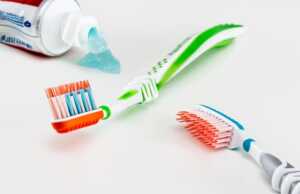
Usually a very good oral hygiene aids in the prevention of gingivitis. Oral hygiene habits to adopt include:
- Brushing twice daily with fluoridated toothpaste and a soft-bristled toothbrush to frequently remove food debris and provide an antagonistic environment for bacterial growth.
- Cleaning of interdental spaces using dental floss or interdental brushes.
- Use of mouthwashes.
- Vigorously rinsing the mouth after eating.
- Visiting the dentist at least twice a year for scaling and polishing to remove accumulated plaque.
The main idea behind all these practices is to keep an oral cavity that will not be conducive to bacteria proliferation and subsequent plaque/tartar formation. Also, these measures ensure that the oral flora is maintained at a harmless level.
How to treat gingivitis?
Treatment usually depends on the etiologic factor.
If due to poor oral hygiene, scaling and polishing and improvement of oral hygiene by consistently practicing oral hygiene habits enumerated above is the treatment of choice.
Gingivitis caused by medication necessitates consultation of the individual’s physician to change the drug or amend the dosage.
Protein and vitamin C supplements are the treatment of choice in cases of malnutrition and vitamin deficiencies.
If caused by a bacterial, fungal or viral infection, respective treatment of the conditions with the right antibiotics, antifungals or antiviral drugs is the treatment of choice.
In case there is associated gingival hyperplasia, a gingivectomy can be done to improve aesthetics.